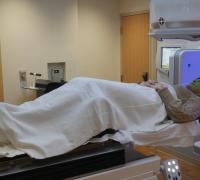
Fletcher Allen, a Vermont university hospital and medical center, serves all of
Vermont and the northern New York region. Located in Burlington, Fletcher Allen is a regional, academic healthcare center and teaching hospital in alliance with the University of Vermont.
Bladder Cancer: Minimally Invasive Treatment
![]() |
|
The bladder is a grapefruit-sized elastic organ that stores urine. Bladder cancer occurs when cancer cells form in the tissues of the bladder. More than 67,000 new cases of bladder cancer are diagnosed in the United States every year. It is the fourth most common cancer among men and ninth among women in the U.S. Fortunately, most people with bladder cancer will not die of the disease, but it does claim about 13,000 lives each year. Treatment Options for Bladder Cancer Treatment options depend on the stage of bladder cancer (Stage 0 to Stage 4). There are four standard treatment options for bladder cancer: |
Learn More
|
- Surgery
- Radiation
- Chemotherapy
- Biologic Therapy
Depending on the type of cancer and the stage, several treatments may be used in combination to increase the chances of a cure. Surgery is the primary treatment for bladder cancer – used in over 90 percent of bladder cancer cases (either alone are in combination with another therapy). When cancer has spread to the muscle wall of the bladder, a radical cystectomy is the preferred treatment choice.
Surgical Treatment: Cystectomy
A cystectomy is the removal of all or part of the bladder and possibly the removal of nearby lymph nodes and organs that may contain cancer. If the bladder is removed, the surgeon creates a new way or path for urine to be stored and to leave the body.
Cystectomy has traditionally been performed using an open approach, meaning the surgeon must make a large abdominal incision to access the bladder. Another option is conventional laparoscopy, which is less invasive but also limits the doctor's dexterity, field of vision and control.
Robotic-Assisted Cystectomy
If your doctor recommends surgery for bladder cancer, you may be a candidate for a minimally invasive, robotic-assisted da Vinci Cystectomy.
Expert Fletcher Allen surgeons use state-of-the-art technology to perform a more precise operation than traditional open surgery allows. It offers several potential benefits compared with prior methods of treatment, including:
- Significantly less pain
- Less blood loss
- Fewer blood transfusions
- Less risk of infection
- Less scarring
- Shorter hospital stay
- Shorter recovery time
- Better clinical outcomes, in many cases
Robotic-assisted surgery offers Fletcher Allen’s expert surgeons added precision and dexterity, which can lead to better clinical outcomes for the treatment of bladder cancer.
As with any surgery, these benefits cannot be guaranteed, as surgery is unique to each patient and specific condition. The da Vinci Surgical System is considered safe and effective, but may not be appropriate for everyone. Always ask your doctor about all treatment options, as well as the benefits and risks.
If you are a candidate for a cystectomy talk to one of Fletcher Allen’s urologists who perform minimally invasive, robotic-assisted surgery for bladder cancer.