Fletcher Allen, a Vermont university hospital and medical center, serves all of
Vermont and the northern New York region. Located in Burlington, Fletcher Allen is a regional, academic healthcare center and teaching hospital in alliance with the University of Vermont.
Nuclear Medicine / PET Imaging
What is Nuclear Medicine ?
Nuclear Medicine, a radiology specialty which has been around since 1950, uses safe and cost-effective techniques to image the body and to treat certain diseases. These techniques help document and track organ or system function.
How does it nuclear medicine work ?
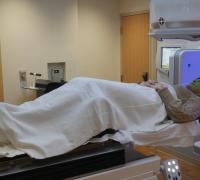
Nuclear Medicine uses very small amounts of radioactive materials or "radiopharmaceuticals" which emit low-level radioactive rays, in order to diagnose or treat disease. Radiopharmaceuticals are materials that are "attracted" to certain organs, or systems in the body. Once a radiopharmaceutical is in the body, patients are placed under a special camera which forms images from the radioactive rays emitted.
What about radiation treatment? Is it safe ?
Absolutely. About 10 to 12 million Nuclear Medicine imaging and therapy procedures are performed in the United States every year. The radiation exposure patients receive is comparable, if not less, than that received during a general x-ray procedure and side effects are rare to non-existent.
Some Common Nuclear Medicine Procedures:
PET Scans: PET scans are performed to diagnose diseases for services including Cardiology, Oncology and Neurology. These procedures involve an injection, followed by a delay, then acquisition of images.
Bone Scans: Three types of bone scans are available: 3-phase, limited, and whole body. These procedures consist of an injection, followed by 2-3 hour delayed images.
Cardiac Scans: These scans usually involve acquiring images of the heart before and after a stress test. The testing lasts approximately 3-3 ½ hours (not all of which is actual imaging or stress testing).
Hepatobiliary Scans: These tests are used to help diagnose liver or gall bladder disease. The test lasts about 1-1 ½ hours.