Fletcher Allen, a Vermont university hospital and medical center, serves all of
Vermont and the northern New York region. Located in Burlington, Fletcher Allen is a regional, academic healthcare center and teaching hospital in alliance with the University of Vermont.
Abdominal Bleeding Therapy - Trauma
Trauma, commonly as a result of motor vehicle accidents, gunshot or stab wounds, is a major cause of internal bleeding. In motor vehicle trauma, bleeding is usually caused by crushing of internal organs, (e.g. liver/ spleen, kidney) or broken bones which tear blood vessels. This bleeding may stop spontaneously or require some form of treatment (i.e. surgery or intravascular embolization.)
A CT scan is performed as first line evaluation of any major trauma and can accurately detect most cases of internal bleeding.
What happens during the procedure?
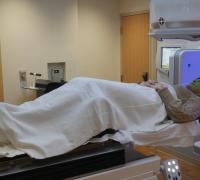
Conscious sedation is provided just prior to starting the procedure, however many patients who require this procedure are unconscious due to injury or already sedated.You will be lying on the x-ray table. You will be connected to several types of monitoring equipment. The technologist will prepare the skin over the groin by cleaning it with an antiseptic solution and place sterile drapes and towels over you to create a sterile work space.
Lidocaine local anesthesia is injected into the skin overlying your groin. A catheter is placed into the artery and contrast dye is injected to allow visualization of the arteries that supply the area of interest. If active bleeding is shown on the angiogram, small inert particles are injected in to the area until the bleeding has stopped. These particles are mixed with x-ray dye so that the Interventional Radiologist can be assured that they are going only to the area of interest and not elsewhere.
The catheter is removed and pressure is applied to the groin until there is no bleeding (approximately 15min.)
This procedure typically requires approximately 1 - 3 hours.
What happens after the procedure?
Patients who require this procedure are admitted to the Intensive Care Unit and closely monitored for signs of further bleeding. If additional bleeding is suspected, patients may require additional embolizations or surgery.
Once patients are stabilized, attention is turned toward any other associated injuries.
If you have any questions or need to reschedule an appointment please feel free to contact the Interventional Radiology Office at 802- 847-8359. Our business hours are Monday – Friday 8:30 a.m. to 5 p.m. Someone is available to take your call after hours for emergencies.
This information is provided by the Fletcher Allen Health Care, Department of Radiology, Division of Interventional Radiology and is not intended to replace the medical advice of your doctor or health care provider. Please consult your health care provider for advice about a specific medical condition. For additional health information, please contact your health care provider.