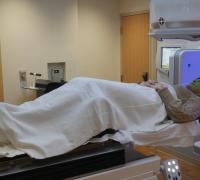
Fletcher Allen, a Vermont university hospital and medical center, serves all of
Vermont and the northern New York region. Located in Burlington, Fletcher Allen is a regional, academic healthcare center and teaching hospital in alliance with the University of Vermont.
Valvular Heart Disease
- Cardiology
- 62 Tilley Drive
South Burlington, VT 05403 - Phone: 802-847-4600
- Fax: 802-847-2533
- Monday-Friday, 8AM-5PM
- Directions
Valvular heart disease continues to be common in the United States. Recent study estimated that between 1 and 2% of the population have mitral valve prolapse, a condition characterized by a redundant valve that often leaks. Mitral valve prolapse is, the most common indication for mitral valve surgery in the United States. The aortic valve regulates flow of blood out of the heart. Scarring of this valve referred to as aortic sterosis, can lead to obstruction.
Primarily a disorder of the elderly, the prevalence of aortic stenosis has increased steadily in the past decade, a reflection, in part, of the greater longevity in the United States.
The treatment of valvular heart disease is designed to reduce mortality as well as ameliorate the symptoms or produce the development of congestive heart failure in order to improve quality of life. Although all University Cardiology Associates treat valvular heart disease, selected members of our group focus on refining therapy and defining novel treatment options.
For example, the choice of operative strategy is pivotal in the treatment of valvular heart disease. Whenever possible patients are referred for mitral valve repair rather than valve replacement in the treatment of patients with mitral regurgitation. Work conducted by Dr. Tischler clearly demonstrated the advantage of mitral valve repair over replacement in terms of ventricular form and function. Dr. Tischler conducted studies to determine whether selected medications can alter the progression of valve disease.
In conjunction with the cardiac rehabilitation unit, functional capacity in patients with valvular heart disease before and after corrective surgery is optimized. The cardiac imaging group focuses on defining underlying mechanisms, severity, and prognostic implications of all forms of valvular heart disease.