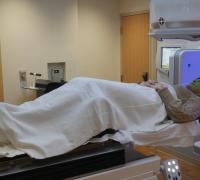
Fletcher Allen, a Vermont university hospital and medical center, serves all of
Vermont and the northern New York region. Located in Burlington, Fletcher Allen is a regional, academic healthcare center and teaching hospital in alliance with the University of Vermont.
Sarcoma
Sarcoma is cancer of soft tissue (such as muscle), connective tissue (such as tendon or cartilage), and bone. It is important to get a diagnosis for the specific sarcoma affecting you by doctors specializing in cancer (Oncologists). Sarcomas can affect children and adults, but are most common in older adults.
Sarcoma: What You Need to Know
Teamwork
Sarcoma is managed best by a group of specialists in Musculoskeletal Oncology, Pediatric Hematology and Oncology, Adult Hematology and Oncology and Radiation Oncology and Pathology. At Fletcher Allen, our physicians, nurses and support staff work together as a team, providing expert care.
Personalized Care
Every patient is unique. You and your family will feel the advantages of personalized, patient-centered care. We optimize your treatment to your specific sarcoma diagnosis.
Experienced, Trusted Expertise
The physicians on staff are board-certified orthopedic surgeons and have additional specialty training in adult and pediatric oncology. Our doctors are University of Vermont College of Medicine faculty members and are involved in research, and in the education of the College of Medicine students and orthopedic surgery residents.
What is Sarcoma?
Sarcoma is also called Musculoskeletal Oncology. That means it is cancer that starts in the muscles, tendons or cartilage, or bones. Typically sarcoma is split into families of bone cancer and soft tissue sarcoma.
At Fletcher Allen, our Musculoskeletal Oncology program goes beyond the strict definition of sarcomas to diagnose and treat blood cell cancers (also called multiple myeloma or lymphomas of bone) as well, which is cancer that starts in the bone marrow. Bone marrow is the substance in the center of your bones that makes red blood cells.
Our sarcoma care also includes cancer that started somewhere else in the body and spread (metastasized) to the bone (also called metastatic carcinomas to bone).
The exact cause of sarcoma is unclear, but several factors can increase your risk of developing it, including:
- Age: the risk most often increases as you age, but there are several specific sarcomas, such as Ewing's sarcoma, which happen more commonly in children and young adults
- Inherited genetic conditions: certain rare genetic disorders passed through families can increase the risk developing sarcoma
- Paget's disease: this precancerous condition that affects older adults increases the risk of bone cancer
- Chemical exposure: Exposure to certain chemicals, such as vinyl chloride and dioxin, can increase sarcoma risk
- Radiation exposure: Previous radiation treatment for other cancers can increase sarcoma risk.
Common Conditions Treated
| Adamantinoma | Hemangioma of bone | Neurofibromatosis |
| Aneurysmal bone cyst | Hemangiopericytoma | Neurosarcoma |
| Angiosarcoma | Hereditary Multiple Exostosis | Non Ossifying Fibroma |
| Bone Tumor | Histiocytosis X | Ollier’s Disease |
| Chondroblastoma | Intraosseous ganglion cyst | Osteoblastoma |
| Chondroma, periosteal | Leiomyosarcoma | Osteochondroma |
| Chondromyxoid fibroma | Lipoma | Osteofibrous dysplasia |
| Chondrosarcoma | Lipoma, atypical | Osteogenesis imperfecta |
| Chordoma | Liposarcoma | Osteoid osteoma |
| Dermatofibrosarcoma protuberans | Lymphoma of bone | Osteomyelitis |
| Desmoid tumor, periosteal | Malignant fibrous histiocytosis (MFH), or Sarcoma not otherwise specified (NOS) | Osteopoikilosis (multiple enostosis) |
| Desmoplastic fibroma | Malignant peripheral nerve sheath tumor | Osteosarcoma |
| Enchondroma | Mazabraud Syndrome | Paget's disease |
|
Extra-abdominal desmoid tumor |
McCune – Albright Syndrome | Pigmented vilonodular synovitis (PVNS) |
|
Eosinophilic granuloma |
Maffucci’s Disease | Primitive neuroectodermal tumor (PNET/Ewing's) |
| Epithelioid hemangioendothelioma | Marfan's Syndrome | Rhabdomyosarcoma |
| Epithelioid sarcoma | Melorheostosis | Rhabdomyosarcoma, alveolar |
| Ewing's sarcoma | Metastatic bone disease | Rhabdomyosarcoma, pleomorphic |
| Exostosis | Multiple myeloma (plasmacytoma) | Soft Tissue Tumors |
| Fibroma | Multiple Hereditary Exostosis | Sarcoma of soft parts |
| Fibromatosis | Myositis ossificans | Synovial chondromatosis |
| Giant-cell tumor of bone | Myxoma | Synovial sarcoma |
| Giant-cell tumor of tendon sheath | Neuroblastoma, metastatic | Unicameral bone cyst |
| Hemangioma | Neurofibroma | Von Recklinghausen's disease (neurofibromatosis) |
Sarcoma Diagnosis and Treatment
The treatment that is right for you will depend upon your exact sarcoma diagnosis. At Fletcher Allen, we use specialized techniques to diagnose sarcomas.
Our knowledgeable physicians treat sarcomas on a regular basis. Should your sarcoma require surgery, you can rest assured in the knowledge that our orthopedic surgeons are highly trained in performing advanced surgical procedures for sarcomas.
Learn More about Sarcoma Treatment at Fletcher Allen
Sarcoma is treated by surgical oncology, radiation oncology and musculoskeletal oncology providers. Find a Fletcher Allen physician