Fletcher Allen, a Vermont university hospital and medical center, serves all of
Vermont and the northern New York region. Located in Burlington, Fletcher Allen is a regional, academic healthcare center and teaching hospital in alliance with the University of Vermont.
Uterine Cancer Diagnosis and Treatments
![]() |
Learn More...
- Find a da Vinci-trained Fletcher Allen gynecologic oncologist.
- Find out if you are a potential candidate for a robotic-assisted surgery.
- Read frequently asked questions about robotic surgery
- Download an informational brochure about gynecologic cancer treatment options.
Uterine cancer is the most common cancer of the female reproductive system in the United States. It accounts for six percent of all cancers in women in this country.
Uterine Cancer Diagnosis
Uterine cancer is diagnosed using the following tests and procedures:
- Annual pelvic exam
- Transvaginal ultrasound – a wand that makes sound waves is inserted into your vagina to create a video picture of your uterus and its lining.
- Hysteroscopy – a thin, lighted tube with a tiny camera on the end is inserted to get a look at your uterus and its lining.
- Tissue sampling (biopsy)
- Taken from the lining of the uterus while in the doctor’s office.
- Surgical biopsy – This procedure is called dilation and curettage (D&C) where tissue is gently scraped from the lining of your uterus. The sample is later analyzed in a lab for cancer cells. Most D&Cs are done while you are under general anesthesia.

Comparison of incisions with traditional open surgery (left) and minimally invasive robotic-assisted surgery (right).
Uterine Cancer Treatment in Burlington, VT

The type of uterine cancer, and how advanced it is, determines your treatment options. A hysterectomy (surgical removal of the uterus) is often the first recommendation for women with early stage gynecologic cancer. Hysterectomy also may include removing:
- Ovaries
- Fallopian tubes
- Select lymph nodes
Hysterectomy is the second most common surgical procedure for women in the United States. Fletcher Allen physicians perform many robotic hysterectomies annually.
Uterine cancer treatment options at Fletcher Allen include:
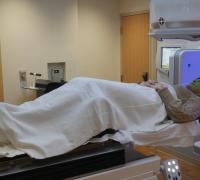
- Radiation therapy
- External beam – Radiation is aimed at specific body points from the outside.
- Internal radiation – Brachytherapy is when something filled with radiation (seeds, cylinder or wire) is placed within your body for a short time.
- Hormone medications or therapy – Drugs that reduce estrogen or increase progesterone.
- Chemotherapy – Chemicals are either injected or taken in a pill to kill cancer cells.
Robotic surgery for uterine cancer treatment at Fletcher Allen offers many benefits over traditional treatments.
Robotic Surgery for Uterine Cancer Treatment Benefits:
Patients find the following benefits from robotic surgery for uterine cancer:
- Significantly less pain after surgery
- Shorter recovery time
- Less scarring
- A faster return to normal daily activities
- Less blood loss and fewer transfusions
- Shorter hospital stay
Our robotic surgeons are specially trained in the most advanced surgical technology available. This means fewer and smaller incisions.
Learn more about uterine cancer or call 802-847-5110.