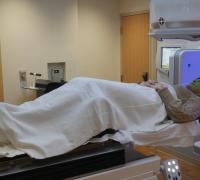
Fletcher Allen, a Vermont university hospital and medical center, serves all of
Vermont and the northern New York region. Located in Burlington, Fletcher Allen is a regional, academic healthcare center and teaching hospital in alliance with the University of Vermont.
Education
Back to Health Care Management Home Page>>
The Center’s Core Program, in partnership with the University of Vermont’s Business School, is eligible for AMA PRA Category 1 CME Credits and gives providers and administrators a core education in finance, operations, marketing, organizational behavior, and strategy. Completed in five full-day lectures over four-to-five months, the core courses provide an excellent opportunity to learn business basics with a limited opportunity cost.
Educational Programs: Core Courses
Program Introduction
The program offers an introduction to the major disciplines of management. The program emphasizes the application of managerial concepts in the context of the providers’ role as a director of a clinical activity, division chief, or service line administrator. The program is structured to be highly interactive and practical with every course being anchored by a case analysis and various in-class activities and discussion. The learning-by-doing format includes case-based analysis to role-play concrete decision-making situations. The program has been designed to provide knowledge and skills that have an immediate impact on the delivery of health care. The program also offers an opportunity to gain or renew contacts across the institution, to learn from peer story-telling, and discuss strategic issues and policies.
Finance
Providers with little or no financial training or experience can learn to use the language and tools of finance. Complex accounting and finance principles are presented in practical, understandable terms. P&Ls from the institution and specific clinical departments are analyzed and discussed. Different rationales for the allocation of resources and expenses are reviews. Providers are given the “language” to converse with administrators about financial issues, and are better able to analyze financial information and participate in making business decisions.
Operations
This course addresses the challenge of designing sustainable clinical service models: Services that simultaneously produce value for customers, employees, and owners. Principles of effective service design are developed through a series of successful and unsuccessful case examples. As a result of this module, providers will learn how to analyze existing services, determine capacity constraints, assess operational flows, discuss strategies to maximize efficiency in operations, determine whether or not potential new services "fit" with existing services, and how to design new services.
Organizational Behavior
This course develops the critical leadership competencies needed to communicate your organization’s vision, make decisions with the support of others, and nurture positive attitude and high performance from those around you. The course addresses issues of motivation, conflict, and compensation. The course offers the necessary tools and techniques to develop to be successful in a team-based environment.
Marketing
Gain a clear, in-depth understanding of core marketing concepts, and identify the essential elements of a strong marketing plan. In the course, providers will develop a thorough understanding of customers and what motivates their behavior and understanding the value of your brands and how to build and develop that value.
Strategy
This course gives providers an advanced strategic leadership model, framework and “tool kit” and a process for turning strategic decisions into improved performance and results. The course will enable providers to accurately diagnose the current business situation, generate some challenging yet feasible scenarios for their units and build a common vision of where things need to go and how to get there. It will enhance providers’ capability to think strategically and lead their organization, department or team to achieve strategic objectives.
Educational Programs: Advanced Courses
Courses on specific topics (e.g., Management of Change; Electronic Health Record Implementation; Advanced Financial Topics) will be offered on a regular basis. Please check back for updates frequently and consult the Calendar for additional offerings through Organizational Development, Continuing Medical Education, The Jeffords Institute, and The University of Vermont.
The Center also anticipates a quarterly lecture series, featuring high-profile speakers on current health care topics and on-going professional development opportunities through project leadership (see our Projects page).
![]() |
Typical Day Schedule
|
7:30am – 8:00am |
Meet & Greet Breakfast: Introductions to fellow participants and the faculty lecturer. |
|
8:00am – 9:30am |
Introduction to Topic: The faculty lecturer will give an overview of the day, discuss the important takeaways from the course, and begin the topic discussion. |
|
9:30am – 10:00am |
Break |
|
10:00am – 11:30am |
Topic Frameworks/Materials: More in depth topic material, providing examples and frameworks for use in health care. |
|
11:30am – 12:00pm |
Lunch Provided by the Center |
|
12:00pm – 1:45pm |
Group Case Analysis: Groups will be formed to discuss a previously assigned case, analyze the content based on the lectures materials and suggest recommendations. |
|
1:45pm – 2:00pm |
Break |
|
2:00pm – 3:00pm |
Group Presentations: All groups will present their findings, followed by a brief Q&A period. |
|
3:00pm – 4:00pm |
Lecturer Conclusion and Key Takeaways: The faculty lecturer will follow up with a summation of the day's learning, key takeaways, and future steps. |
Tuition: $2,500
Courses run all day on Fridays: 8am-4pm.
All courses located at or near the University of Vermont campus.
Receive Certificate of Completion at Closing Reception.
CME Certificate delivered 6-8 weeks after completion of course.
Back to Health Care Management Home Page>>